I haven’t written much about MODY or my particular situation yet. This is in part due to the complexity of the situation and the very personal nature of my experiences.
Like ultramarathons, it is intimidating to think about. Just like tackling a big race, addressing a rare disease feels daunting. However, I am feeling inspired to write about this now due something I am going through as I’m writing this.
The myriad forms that diabetes can take create individual challenges for each person living with them.
Individuals with Type 1 diabetes rely on an external insulin source. This means non-stop calculations. If they eat this, how much insulin do they need right now? How much will they need later? What is going to get them through the night? Insulin pumps and CGMs have eased some of this burden by facilitating a true basal/bolus* insulin distribution. Algorithms and sensors have taken the guess work out of this for many and established a consistency which vastly increases quality of life. Not having to manually inject is a nice bonus.
*A quick note about insulin. There are two categories of insulin distribution. Basal dosing is meant to provide stability long term. Bolus dosing is meant to provide an as needed dose in the moment, generally accompanying food intake. There are formulations of insulin for each of these purposes in the form of long and fast acting. Pumps negate the need to differentiate, as they can dose precise amounts automatically or with manual adjustment as needed.
Type 2 diabetes often does not require external insulin, though as the disease progresses with age or due to environmental factors insulin can be incorporated in therapies. Fortunately, I am not there yet but that is one of the reasons for writing on this topic today.
MODY4 presents an interesting challenge. It is a rare variant of an already rare variant of diabetes. As such, there simply is not enough clinical data to have the kind of default therapy strategies present for Type 1 or Type 2.
I was initially diagnosed and treated as Type 2 by a physician. Later I was re-diagnosed as Type 1 by a NP. Eventually, an endocrinologist brought up the idea of Maturity On-set Diabetes of the Young. Each phase brought with it dramatic changes to my therapy. I’ll write more about this saga in an origin story post.
But, this brings me to the present moment. I’m currently on a plane, and just moments ago I began to drop into hypoglycemia. This is the low blood sugar condition that I have rarely encountered in many years. My principle concern has, for much of my journey, has been with limiting hyperglycemia. Here I was though, on a plane of all places feeling my blood sugar drop.
I knew, from experience and preparation that I was not in any real danger. I knew the signs, I can literally see them. When my blood sugar begins to drop below 90 mg/dL, I develop a small sunspot in my vision. It’s not blurry per se, but it does just feel like I’ve looked at a bright light. If I start to get even lower, then I may start to tremble. Fortunately, thanks to the wonder of technology and the CGM that I wear i was able to immediately quantify the feeling I was experiencing into actionable data. My CGM told me that my blood sugar was 71 mg/dL and indicated that it may still be dropping.
A plane is not the worse place to experience hypoglycemia, flight attendants can be called and orange juice or candy can be quickly delivered, but nearly 20 years of diabetes has taught me to always make sure you have a cushion before needing to rely on assistance from others. In that spirit, being an ultrarunner and all, I have a ridiculous stash of goops and goos that are very easy to pack into a personal bag. I consumed a UCAN pineapple gel. It’s a no sugar product but I was not in an emergency situation so slow carbs still felt like the smart immediate response. If more was needed, I could signal a flight attendant.
I’ll note that, about a half an hour after consuming the UCAN, my CGM is reading 116 mg/dL. A rather large increase all things considered that a healthy individual would not be experience.
But back to MODY.
There is some testing required for this diagnosis. First, due to MODY patients not matching a phenotype for Type 2, Type 1 needs to be ruled out. This is done with a test for antibodies and c-peptides. If levels aren’t raising Type 1 alarm bells, then a genetic test can be taken in an effort to identify the presence of a mutation.
This becomes tricky as you have to know what you’re looking for.
I have a crack team at the Joslin Diabetes Center here in Boston, and the company they used for genetic testing searched for a broad spectrum of possibilities in the known MODY array. The results they came back with were perplexing. I was negative for what they searched for, however they found a mutation of “unknown significance”.
That was the actual phrase. Deeper in the results they elaborated that they found a mutation in the PDX1 gene that they had only encountered five times.
Five times. They had only seen five instances of this mutation. A single digit number.
There are around 14 known variants of MODY to date, and is thought to make for less than 5% of all patients with diabetes. The more common variants have considerable amounts of data to inform treatment and prognosis.
My endocrinologist was dubious. She knew that the PDX1 gene, otherwise known as insulin promoter factor-1 could have incredible relevance to my diabetes. Together we poured through national databases available in the National Library of Medicine and confirmed that the nomenclature of my PDX1 mutation was unique. There were NO reported cases in any of the NIH databases. She dug deeper and eventually found that internationally there were around 150 cases reported. Based on the mutation existing in the PDX1 gene, we have determined the most likely variant of MODY is referred to as MODY4.
But she found something even more troubling. The lab that provided the genetic testing moved their headquarters to the Netherlands and no longer accepted samples from the US. They did this, just a few months after I had my testing done. The new company that Joslin uses does not have as broad of search pattern for MODY.
I was 21 when I was initially diagnosed. I was 25 when MODY was first introduced. I was 38 when I finally was tested. Had I waited just 3 months longer, we may not have found the mutation at all.
So now we know there is much we don’t know. Next steps are a little bit of a mystery as we seek to discover as much as we can. I’m currently taking four medications to manage my diabetes as it is right now; Metformin (biguanide), Glipizide (sulfonylurea), Jardiance (sodium-glucose cotransporter – SGLT2 inhibitor), and Ozempic (glucagon-like peptide 1 – GLP-1 agonist). There is hope to be able to reduce this regiment as my A1C lowers to a less alarming level as it has been.
One of the next steps in exploration is to image my pancreas. I currently have a CT scan of my abdomen on my calendar because we want to see if the dang thing is even fully developed. It’s unlikely, but it’s something important to rule out. There is a slim possibility that in the embryo, my pancreas never finished developing.
An underdeveloped pancreas could point to other possibilities but we are only guessing at this point. Hopefully, we’ll learn more from the CT scan and if I end up being a case study in MODY4 then hopefully what we learn will help others.
My plane is about to begin it’s descent, and I can report that my CGM is reading my glucose level safely at 113 mg/dL. Living with diabetes can be complicated and messy. It is often frustrating and disheartening but everyday research is being done, treatments and technologies are being developed so there is much to be optimistic about.
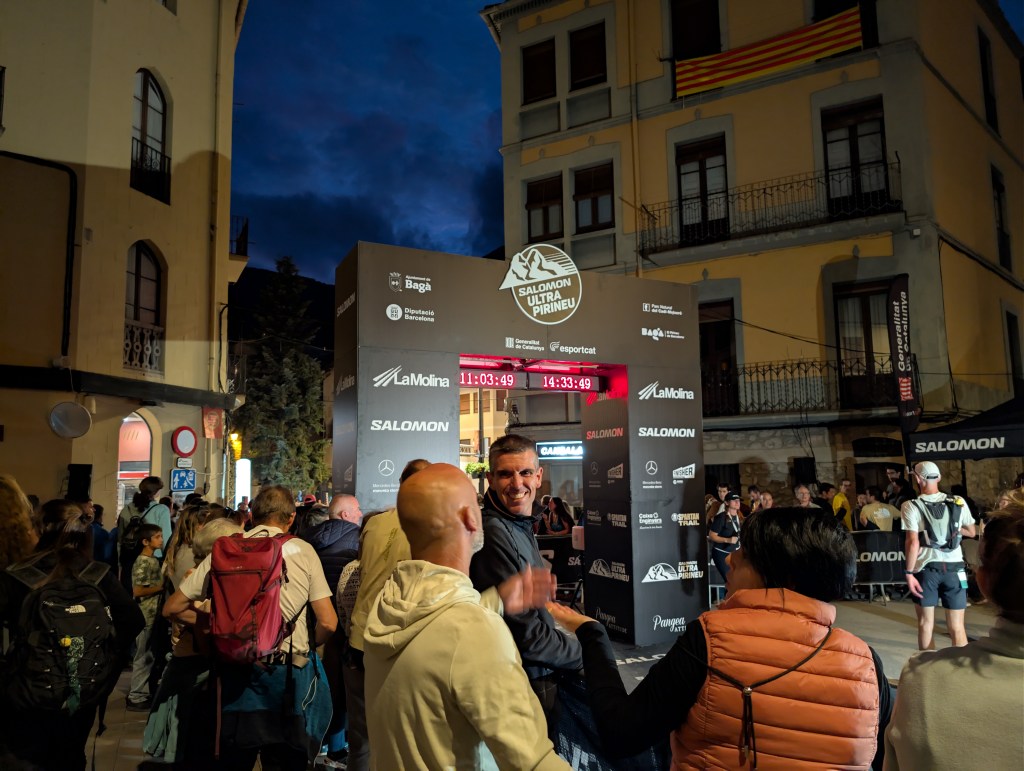


 Type 4 Fun!
Leave a comment